



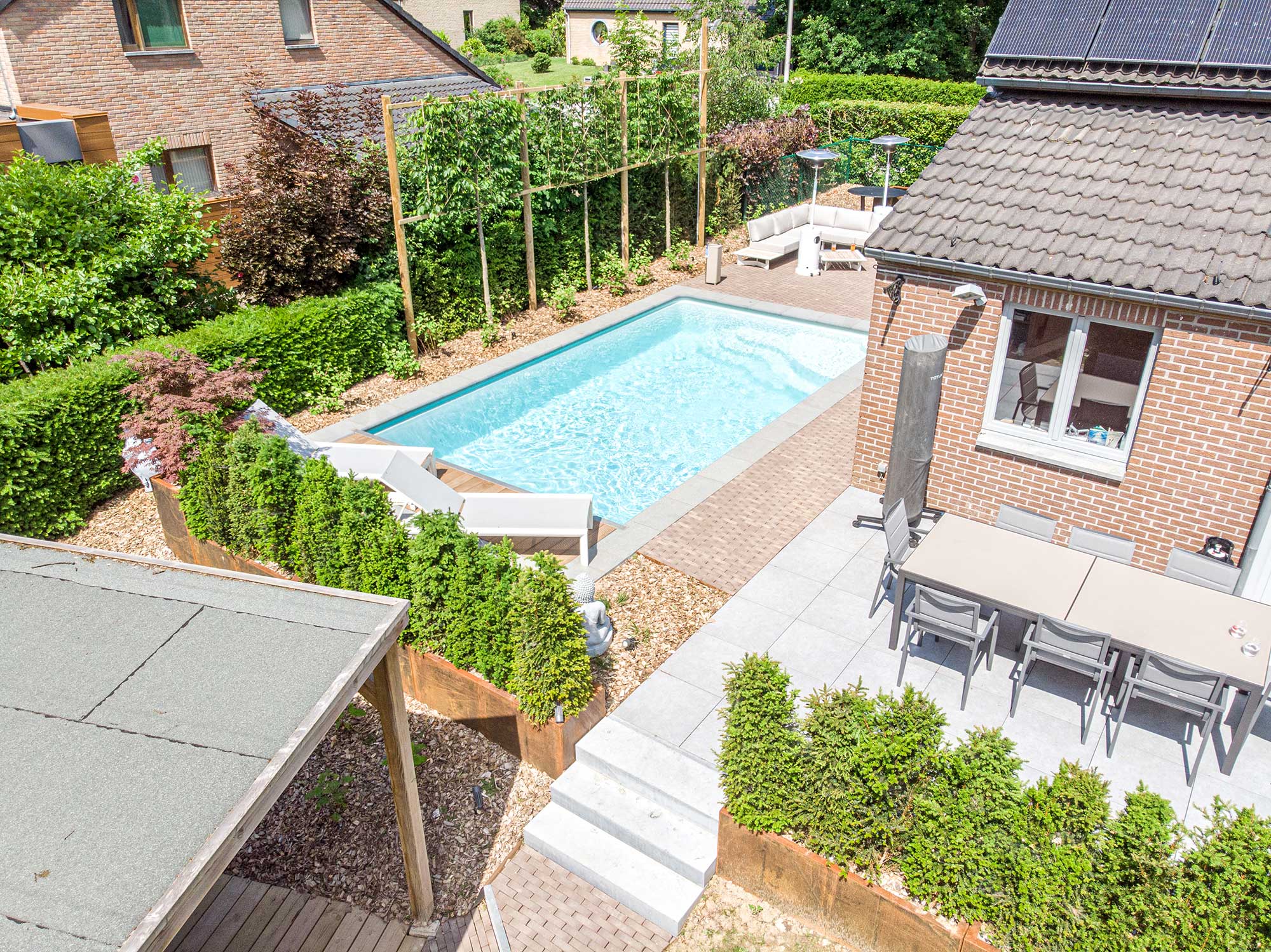
In outdoor design projects, integrating planting into a terrace serves several purposes: improving user comfort, enhancing the aesthetic quality of the project, structuring the space and creating long-term site value. Whether for a hotel, residential building, rooftop, office environment or hospitality venue, planting should be considered from the earliest design stages.
In this respect, a pedestal terrace is a particularly relevant solution for professionals. Thanks to its modularity, adaptability and the technical void created beneath the surface, it makes it easier to integrate landscape solutions while preserving the overall performance of the structure.
Below are the main points to consider when integrating plants into a pedestal terrace in a professional context.
Why pedestal terraces make planting integration easier
1. Greater design freedom
A pedestal terrace makes it possible to create more flexible and more creative outdoor layouts. By working with levels, rhythms, circulation areas and planted zones, the terrace can be structured in a more qualitative way.
This flexibility is especially useful in professional projects, where plants can serve several functions:
- creating visual separations;
- guiding circulation paths;
- improving privacy in specific areas;
- enhancing perceived comfort;
- giving the place a stronger identity.
The ability to integrate planters, planting boxes or landscape features at different points across the terrace makes it possible to design outdoor spaces that are both aesthetic and functional.
2. Better water management
One of the main advantages of a pedestal terrace is that water can drain freely beneath the surface. This configuration helps reduce the risk of standing water and facilitates rainwater management, which is essential in any sustainable project.
For a planted terrace, this is even more valuable because it also makes it easier to integrate:
- irrigation systems;
- technical networks;
- discreet drainage solutions;
- maintenance provisions.
For professionals, this is a practical advantage both during the design phase and throughout the life of the project.
3. A modular and adaptable solution
In many B2B projects, the use of a terrace may evolve over time. A hospitality space may be reconfigured, a corporate rooftop may be redesigned, or a shared residential area may be adapted to changing user needs.
A pedestal terrace makes this evolution easier. Green elements can be moved, replaced or expanded more easily than with a more fixed solution. This modularity allows the project to evolve without major works.
4. Useful technical space for equipment
The space beneath the terrace is a real asset for integrating the systems required in a landscape project: irrigation, lighting cables, power supply for certain features or occasional access to technical networks.
This configuration makes it possible to combine:
- the aesthetic quality of the project;
- discreet integration of systems;
- accessibility for maintenance;
- good space organisation.
In a professional setting, this is essential to deliver an outdoor space that is attractive, functional and easy to maintain.
5. Better anticipation of maintenance requirements
Maintenance is a key criterion in any professional project. A planted terrace must remain easy to manage over time, whether for watering, pruning, replacing plants or accessing technical systems.
Thanks to their modular design, pedestal terraces make it easier to anticipate these maintenance needs. They provide a strong foundation for durable outdoor layouts with controlled maintenance requirements.
How to integrate plants into
a pedestal terrace
Select plants suited to the project context
Plant selection should not be based on aesthetics alone. In a professional project, several parameters must also be taken into account:
- sun exposure;
- wind;
- climatic constraints;
- maintenance frequency;
- the intended use of the space;
- the desired image.
For example:
- for a Mediterranean atmosphere: lavender, olive tree, rosemary;
- for a contemporary style: ornamental grasses, agapanthus, boxwood;
- for a lush ambience: palms, hibiscus, alocasia;
- for more restrained or mineral projects: sedums, thyme, rock garden plants.
In a B2B context, it is often advisable to prioritise robust species that match the planned level of maintenance and the actual site conditions.
Integrate planters and containers into the design
One of the most effective ways to integrate planting into a pedestal terrace project is to allow space for pots, planters or fixed containers from the design stage.
When these elements are planned from the outset, greening becomes a fully integrated part of the architectural and functional concept.
Consider integrated planters in certain layouts
In some projects, it may be relevant to incorporate planters directly into the terrace design. This is especially useful when a stronger visual integration of greenery is desired or when planting helps structure the space.
This approach can be particularly relevant for:
- rooftops;
- hotel terraces;
- office environments;
- premium residential projects;
- hospitality and reception areas.
The selected plants must of course be suitable for container growing and adapted to the specific site conditions.
Use aromatic and edible plants where relevant
In some contexts, especially in hospitality, hotels or shared spaces, aromatic and edible plants can provide additional value in use.
Basil, thyme, mint, rosemary or sage can help:
- enrich the user experience;
- strengthen the identity of the place;
- create a link between landscape design and everyday use.
Beyond their decorative value, these plantings can also contribute to the overall experience and differentiation of the project.
Consider greening as part of the overall project
Integrating plants into a pedestal terrace does not simply mean adding a few containers at the end of the project. In a professional context, greening should be considered a full component of the design, just like circulation, lighting, furniture or water management.
By anticipating loads, maintenance, technical networks, irrigation and uses from the start, professionals can design terraces that are more qualitative, more durable and more attractive.
With a pedestal system such as Buzon, it becomes easier to integrate planting within a logic of performance, modularity and architectural quality.