
Decking on pedestals: 5 mistakes to avoid on a professional project

Building a patio is an exciting project that provides a space to relax and enjoy the outdoors. However, it is essential to avoid certain common mistakes to ensure the result meets your expectations. Buzon patio supports, renowned for their quality and reliability, are the right choice. Here are five mistakes to avoid when building your patio.
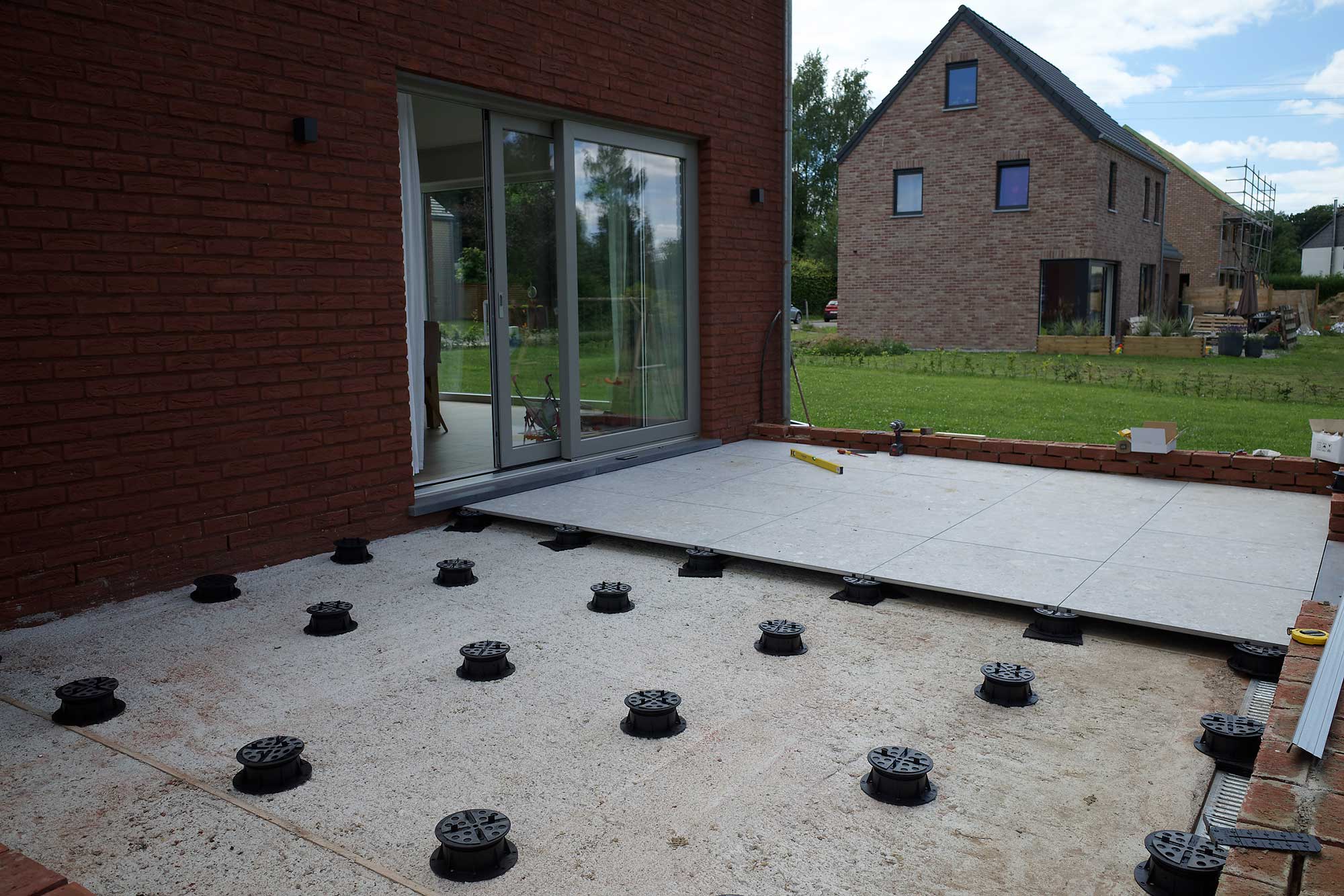
1. Underestimating substrate preparation

On site, the quality of the substrate directly affects the stability of the terrace and the durability of the structure. Poorly prepared substrates can lead to level issues, drainage problems or defects over time.

Before installation, it is essential to check:

  • that the substrate is clean;
  • that it is stable;
  • that it is sufficiently level;
  • how slopes and water drainage are managed.

With a pedestal terrace system, an uneven substrate is not necessarily a problem, provided you choose a solution that can accurately compensate for level differences. Buzon pedestals allow for precise height adjustment and help create a perfectly level surface while maintaining water drainage beneath the finish.

For professionals, this means real added value in terms of time savings during installation and greater reliability in the final result.

2. Choosing a system that is not suited to the finish or the site configuration

Not all projects have the same technical constraints. Substrate type, build-up height, finish material, service loads and edge detailing all need to be considered from the design stage.

One of the most common mistakes is selecting a standard solution without verifying whether it is compatible with:

  • the chosen finish material;
  • the available build-up height;
  • the specific site constraints;
  • the finishing and accessibility requirements.

Timber, ceramic pavers, stone, concrete or tiles: Buzon pedestals are compatible with a wide range of finishes and can be used in many different configurations. The range is designed to meet a variety of project requirements thanks to pedestals and accessories adapted to the application, whether installed on a concrete slab, over waterproofing, or on another compatible substrate.

For contractors and specifiers, making the right technical choice upstream helps reduce installation risks, improve site efficiency and ensure overall project consistency.

3. Overlooking load requirements and user comfort

In a professional context, a terrace must not only look good: it also needs to meet requirements in terms of strength, stability and user comfort.

Poor load assessment can compromise the reliability of the installation, especially on projects involving:

  • heavy furniture;
  • planters;
  • technical equipment;
  • higher traffic levels.

Buzon pedestals are designed to support high loads and ensure even load distribution, contributing to the overall stability of the system.

Another point that is often underestimated is acoustic comfort. On some terraces, especially in multi-residential, hospitality or commercial environments, impact noise can become a source of disturbance. Integrating acoustic reduction solutions compatible with the pedestal system can improve user comfort and enhance the perceived quality of the delivered project.

4. Forgetting maintenance and technical accessibility

In a professional project, a terrace should also be designed as a structure that remains easy to maintain over time. Failing to provide access to services or equipment located beneath the finish can make future interventions more complex and costly.

Lighting, cabling, drainage, irrigation or technical systems: all of these elements should remain accessible when needed. For that reason, it is a real advantage to plan removable sections or access hatches from the design stage.

Thanks to their modular design, Buzon pedestals make it easier to integrate removable areas and run services beneath the terrace without compromising either aesthetics or structural stability.

This approach allows professionals to deliver a terrace that is not only high-performing today, but also easier to maintain and adapt in the future.

5. Poorly anticipating material movement and dimensional variation

Finish materials react to temperature changes, moisture and service conditions. If these movements are not properly anticipated, they can lead to alignment issues, excessive pressure points, or both technical and visual defects.

With a pedestal terrace, it is therefore essential to plan an installation that can accommodate the natural movement of materials. Buzon pedestals allow for precise adjustment of height and positioning, helping to maintain a level and stable surface over time.

To ensure system performance, attention should be paid to:

  • correct pedestal spacing;
  • appropriate support for each slab or board;
  • installation in line with the properties of the finish material.

Proper anticipation of these parameters helps make the terrace more reliable, preserve its appearance over time and reduce the risk of remedial work on site.

Securing the success of a terrace project

For professionals, the success of a terrace depends not only on the quality of the finish, but also on the relevance of the installation system. Substrate preparation, system selection, load management, maintenance and material behaviour all play a role in delivering a durable structure that meets the end client’s expectations.

With Buzon pedestal systems, contractors, architects and specifiers benefit from a reliable solution to meet the technical requirements of outdoor projects while optimising on-site installation.