Maintaining access to services and simplifying maintenance
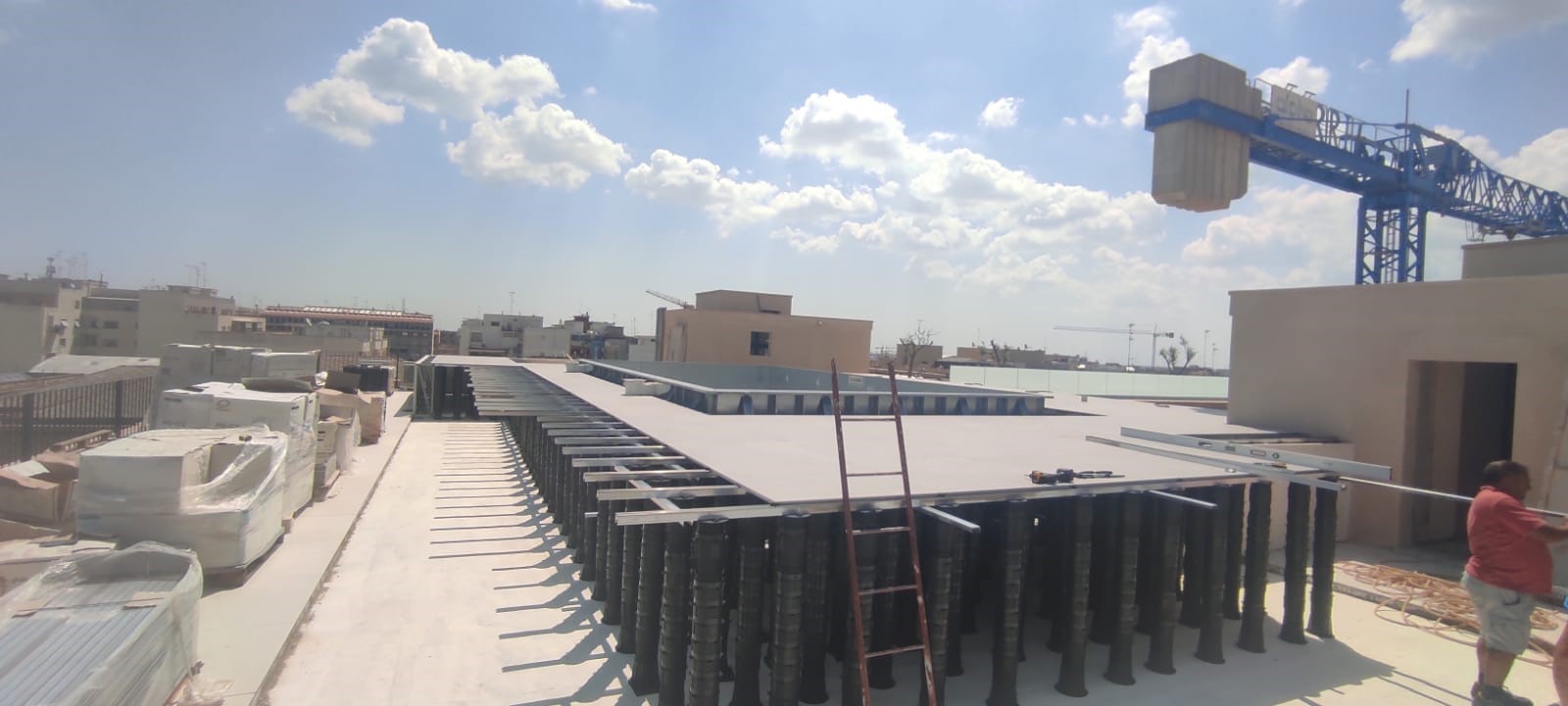
One of the main advantages of a high-rise pedestal terrace is the space available below the surface finish. This technical void makes it possible to conceal services while retaining access for inspection, maintenance or intervention work.
This feature is especially relevant for commercial, hospitality, retail or multi-residential projects, where technical equipment is extensive and must remain accessible over time.
A pedestal terrace can therefore help to:
- integrate services without leaving them visible;
- facilitate inspections of the waterproofing membrane;
- limit destructive work during maintenance;
- simplify certain future modifications;
- maintain a consistent exterior finish.
The possibility of locally removing the surface finish is an important benefit for building management and the long-term durability of the development.
Matching the surface finish to the project identity
High-rise pedestal terraces can be completed with a range of surface finishes, depending on the architectural intent, technical requirements and intended use.
Porcelain tiles, natural stone, concrete slabs, timber boards or composite decking can each be installed on an appropriate substructure. The finish should be selected according to the terrace’s intended use, operational loads, weather exposure, installation constraints and the manufacturer’s recommendations.
Combining materials can also help differentiate uses or improve the legibility of the space. For example, a circulation area can be distinguished from a seating or dining area through a change of texture, format or finish.