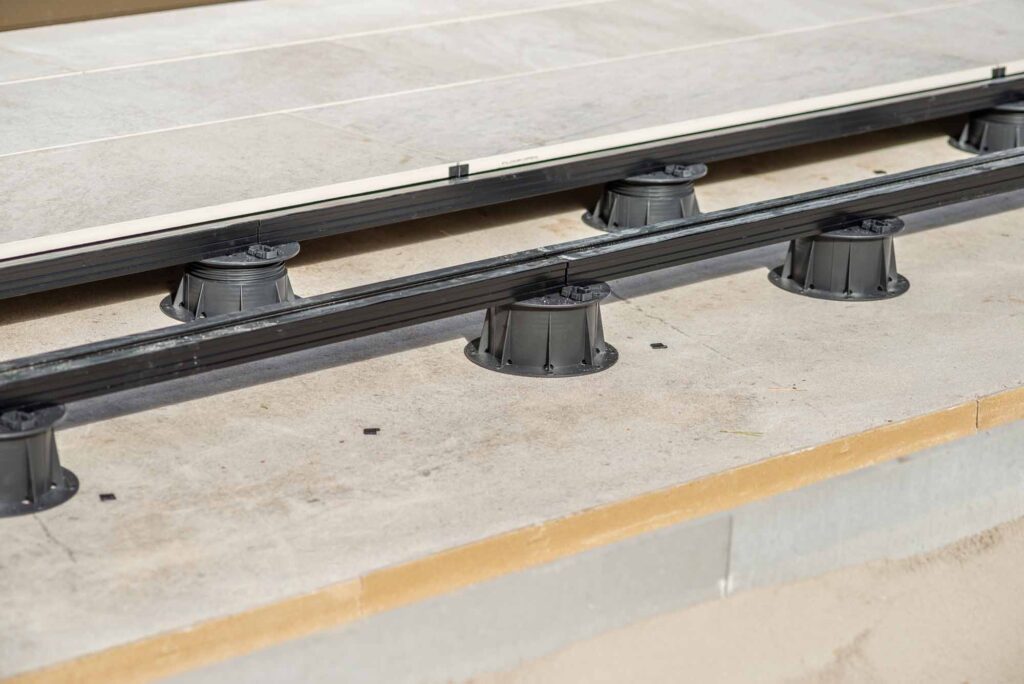
Installing pedestal terraces is a popular technical solution for its speed and modularity. However, in a professional context, the slightest installation error can lead to structural defects, uneven surfaces, or disputes with the client. For installation companies and specifiers, anticipating critical points is the key to a successful project. Here are the technical mistakes to avoid.
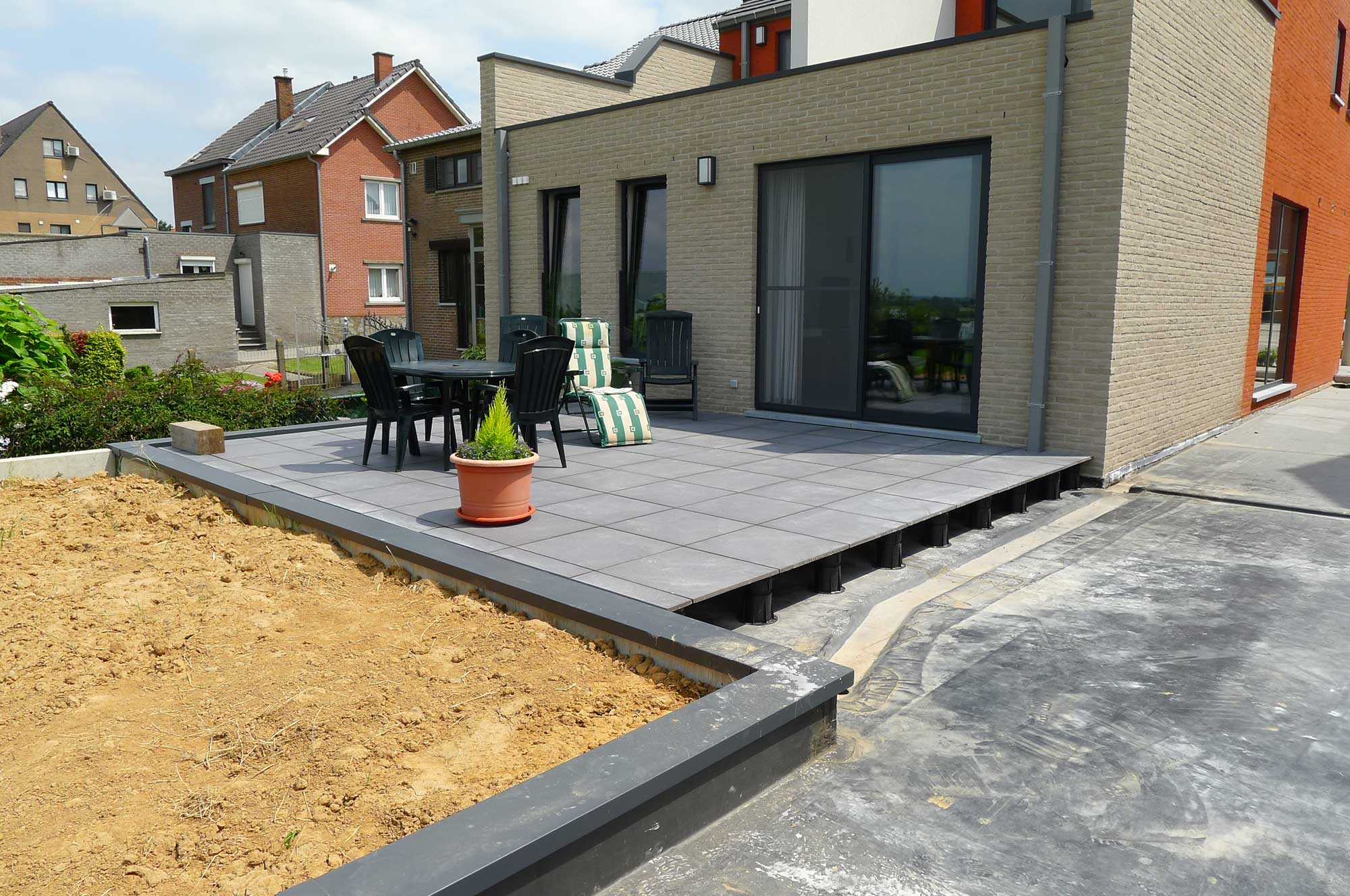
1. Failure to prepare the substrate
The stability of the terrace is inseparable from the quality of the substrate. Placing pedestals on an unstabilized or poorly drained ground is a major error that inevitably leads to differential settlement.
- Pro recommendation: The substrate must be perfectly compacted, sound, and have sufficient drainage slope to prevent water stagnation under the structure. An irregular substrate can be compensated for by using protective pads (e.g., U-PAD), but it never replaces a solid structural foundation.
2. Inaccurate layout and adjustment
A pedestal terrace requires millimeter precision. Measurement errors, particularly regarding installation heights or slope calculations, create imbalances and unacceptable level differences.
- Pro recommendation: The use of a rotary laser or a precision level is essential. In the case of a slope, using slope correctors (placed under the pedestal to ensure vertical load) is preferable to self-leveling heads, which can introduce lateral instability under load.