
Pedestal terraces and sustainable construction: the environmental benefits of Buzon solutions

In outdoor development projects, environmental criteria are playing an increasingly important role from the design stage onwards. For architects, specifiers, installation contractors, landscape architects and project owners, the choice of a terrace system is no longer limited to stability, ease of installation or aesthetic appearance. It must also take into account material circularity, water management, the durability of the structure and the overall impact of the project.

Buzon adjustable pedestals are part of this approach. Made from recycled materials and fully recyclable, they make it possible to create demountable, adaptable terraces that are compatible with more responsible construction practices. Combined with a design suited to the substrate and site constraints, they provide a relevant solution for projects seeking to reconcile technical performance with environmental objectives.
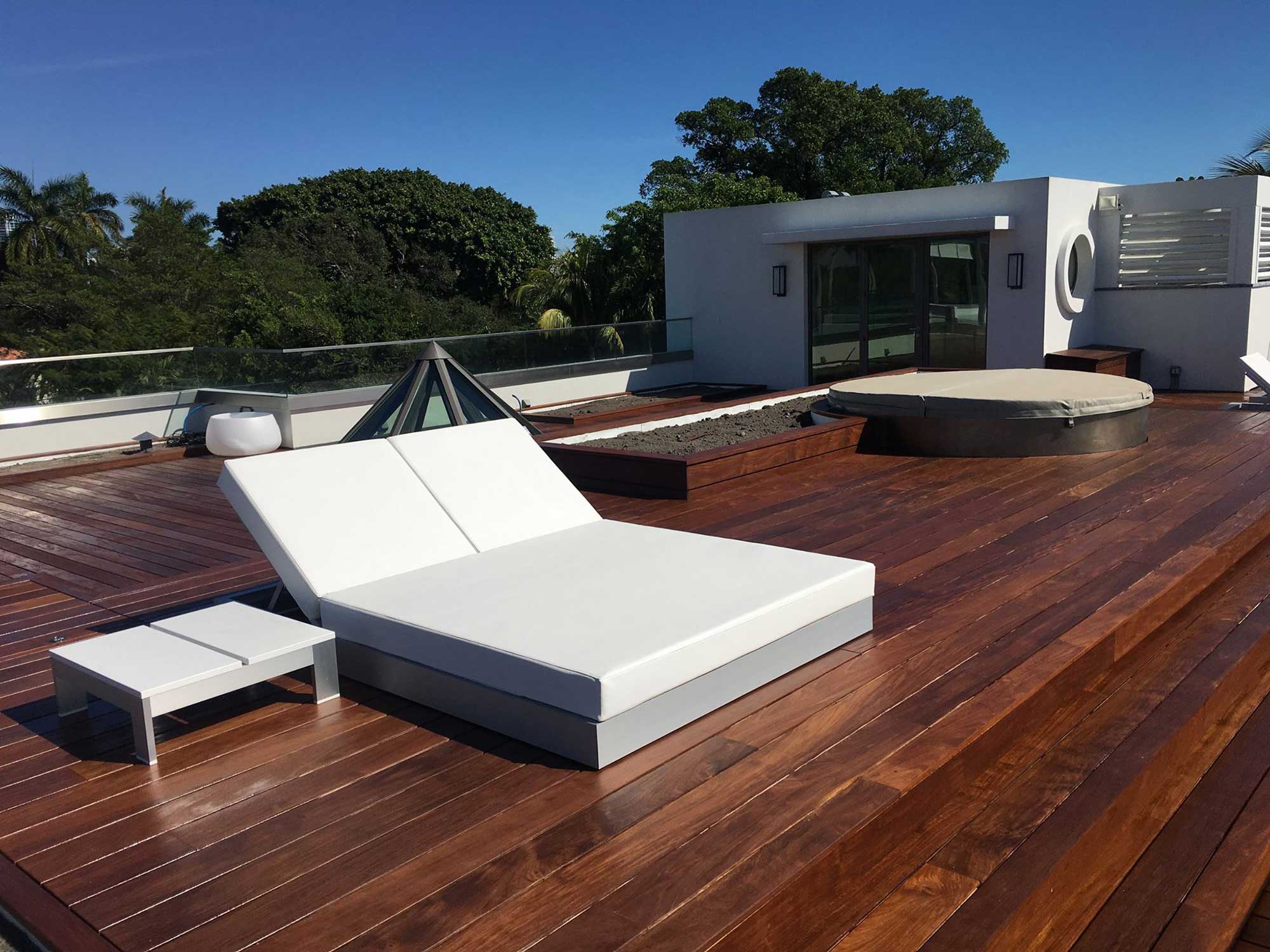
Recycled and recyclable materials

Buzon adjustable pedestals are manufactured from recycled raw materials. This choice is part of a circular economy approach, which aims to keep materials in the production cycle for as long as possible and limit the use of new resources.

At the end of their service life, the pedestals are also 100% recyclable. This feature is an advantage for projects in which material selection must meet objectives relating to reuse, recovery or the reduction of construction waste.

The PB and DPH ranges also hold Cradle to Cradle Certified® Bronze certification. This international certification assesses products according to criteria relating in particular to material health, circularity, water management, and the social and environmental responsibility of manufacturing processes.

For professionals, these elements can help document material choices as part of an environmental strategy, a specific specification or a building certification process.

A demountable solution that supports project adaptability

Pedestal installation offers another environmental benefit: it makes the installation demountable. Unlike certain systems that require permanent installation or extensive works, a pedestal terrace can be locally dismantled to access the substrate, waterproofing membrane or technical services.

This accessibility makes it possible, in particular, to:

  • work on equipment located beneath the surface finish;
  • replace an individual slab or board;
  • locally adjust certain system components;
  • limit demolition during maintenance work;
  • preserve materials that remain in good condition.

From a sustainability perspective, this modularity helps extend the service life of the terrace and reduce invasive interventions throughout the life of the building or outdoor development.

Controlled rainwater management

The pedestal installation principle creates a void between the substrate and the surface finish. Combined with open joints between slabs or gaps between boards, this void promotes the flow of water towards the drainage system provided for in the project.

This configuration limits surface water retention and helps preserve the proper functioning of the substrate. It is particularly relevant for projects exposed to frequent or heavy rainfall, provided that the slopes and drainage systems are correctly designed.

On a permeable surface, water can be directed towards the ground and contribute to a more natural management of rainwater. On a roof terrace or waterproof substrate, it is directed towards the drainage provisions designed for this purpose. In all cases, a pedestal terrace does not replace the need to design an appropriate drainage system, but it facilitates access to drainage outlets and their maintenance.

For professionals, it is therefore essential to anticipate:

  • substrate slopes;
  • drainage outlets and drainage provisions;
  • potential low points;
  • the accessibility of technical areas;
  • the layout of the surface finish near drainage outlets.

Environmental commitment embedded in company practices

Buzon’s environmental approach is not based solely on the characteristics of its products. The company also implements several initiatives aimed at reducing its impact and preserving biodiversity.

Its headquarters in Liège was designed as a passive building in order to limit energy requirements. The site also includes a wildflower meadow, vegetable gardens and beehives, all of which help support local biodiversity.

Buzon also carries out an audit every two years as part of its ISO 14001 certification, in order to assess and improve its environmental management approach. The company also undertakes carbon-offsetting actions, notably through the annual planting of more than 30,000 trees in a nursery in Madagascar.

For project owners and specifiers, these commitments are additional elements to consider when assessing the environmental consistency of a supplier and its value chain.

Concrete arguments for more responsible terrace projects

As part of an environmentally responsible terrace project, Buzon adjustable pedestals offer several practical advantages:

  • recycled and recyclable materials, in line with circular economy principles;
  • Cradle to Cradle Certified® Bronze certification for the PB and DPH ranges;
  • a demountable and modular system, facilitating maintenance, adaptation and local replacement of components;
  • easier rainwater management, thanks to water circulation beneath the surface finish;
  • the potential reduction of heavy works, depending on the nature of the substrate and the project configuration;
  • a committed manufacturer, integrating environmental initiatives into its activities and its site.

Designing durable terraces with Buzon pedestals

A more responsible terrace relies on a comprehensive approach: material selection, drainage design, the durability of the surface finish, ease of maintenance and anticipation of how the site may evolve. Buzon adjustable pedestals address several of these challenges through their composition, recyclability, modularity and compatibility with different types of surface finishes.

For professionals, they provide a technical solution for designing outdoor spaces that are durable, aesthetically pleasing and accessible over time. A thorough assessment of the substrate, loads, drainage systems and finishes remains essential to ensure that the system’s environmental benefits fully contribute to the overall performance of the project.